Rhyme Hub
Writing by Ear: Sound-Alikes, Homophones, and Wordplay
2 November 2026
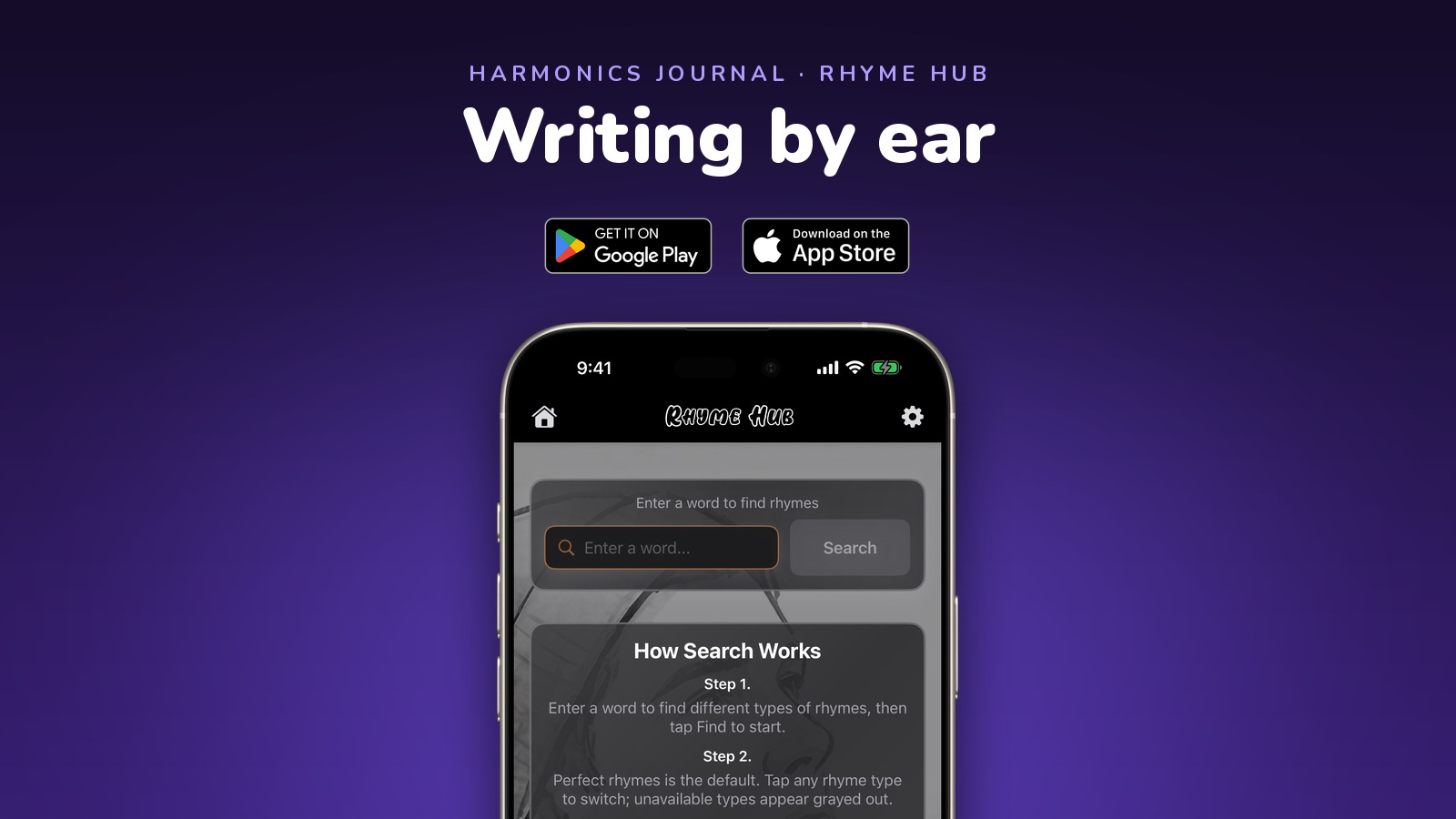
Some writing is built for precision. Some is built for mood. And some comes alive when language starts to bend, echo, and play with itself. That is where Sound-Alikes and Homophones become especially useful.
These are not just clever extras sitting off to the side. They open up a different kind of creative thinking. Sound-Alikes help you find words that share a similar sound shape, even when they are not true rhymes. Homophones go a step further by giving you words that sound the same but mean something different. Together, they create opportunities for wordplay, double meanings, surprise turns, and lines that catch the listener a second time.
Explore beyond rhyme
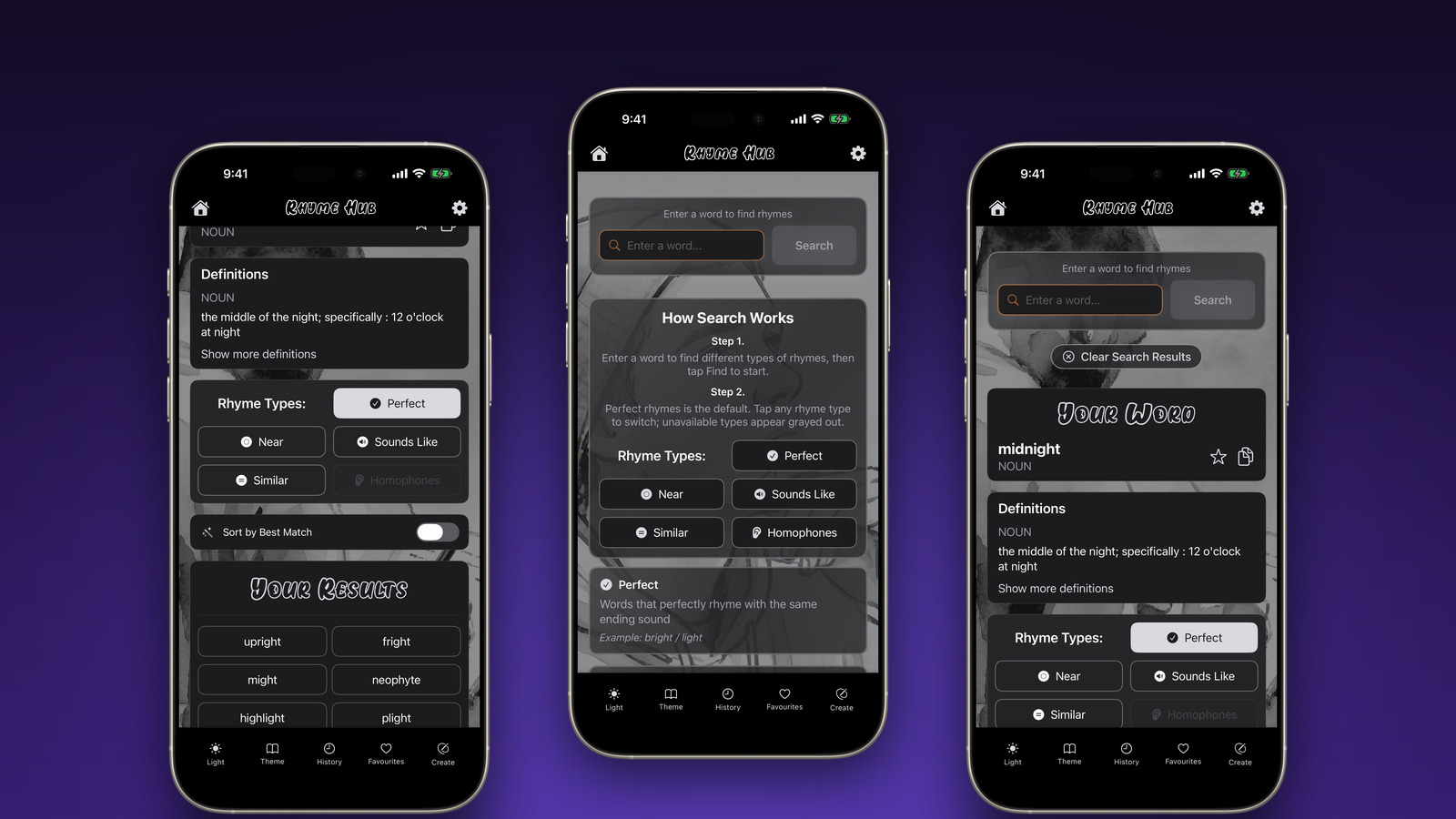
In RhymeHub, both Sound-Alikes and Homophones sit alongside the other result types after you search a word. You enter your word, press Search, and explore the results. From there, you can move into Sound-Alikes or Homophones whenever the writing wants something more playful, more unusual, or less predictable. Tap a word to see its definition, then follow that thread into a fresh search if a new idea starts to emerge. That keeps the experience light on friction and strong on discovery.
Wordplay that changes a line
That matters because not every memorable line wins by being direct. Sometimes it wins because it twists slightly. A sound-alike can help you find a phrase you would not have reached through rhyme alone. A homophone can open the door to contrast, irony, humour, or a lyric that means two things at once. These are the kinds of moments that can make a chorus more interesting, a poem more layered, or a short line much harder to forget.
Writers and lyricists have played with sound for as long as language has been shaped for effect. Puns, echoes, mirrored sounds, and double meanings have always been part of the craft. What modern writing apps can do is make those possibilities easier to reach in the moment, while the line is still alive and changing. Instead of stopping to manually chase a hunch, you can explore those sound relationships inside the same creative flow.
Follow the sound
That is where RhymeHub handles these features well. It keeps them close to the main search experience, so they feel like part of the same creative conversation rather than a side road you have to hunt for. You can move from perfect rhymes to near rhymes, then into sound-alikes or homophones, comparing not just what fits, but what sparks. That makes the app feel responsive to the real messiness of writing, where one good word often leads to a better one you were not expecting.
Sound-Alikes and Homophones are useful because they remind us that language is not only about correctness. It is also about surprise. About tone. About the small electric moment when a word does more than one job at once.
If you enjoy writing that plays a little, twists a little, or means more than it first appears to mean, Rhyme Hub is ready when the ear wants to lead.
Get Rhyme Hub
- Download Rhyme Hub free on the App Store
- Available on iOS and Android. Google Play: https://play.google.com/store/apps/details?id=au.harmonics.rhymehub
- Visit the Rhyme Hub website
- Follow along: Facebook · Instagram · X